Native alternatives to common exotic plants
Some popular garden plants spread into bushland or are declared weeds in parts of Australia. For each one, we list natives that do a similar job in the garden and suit your region.
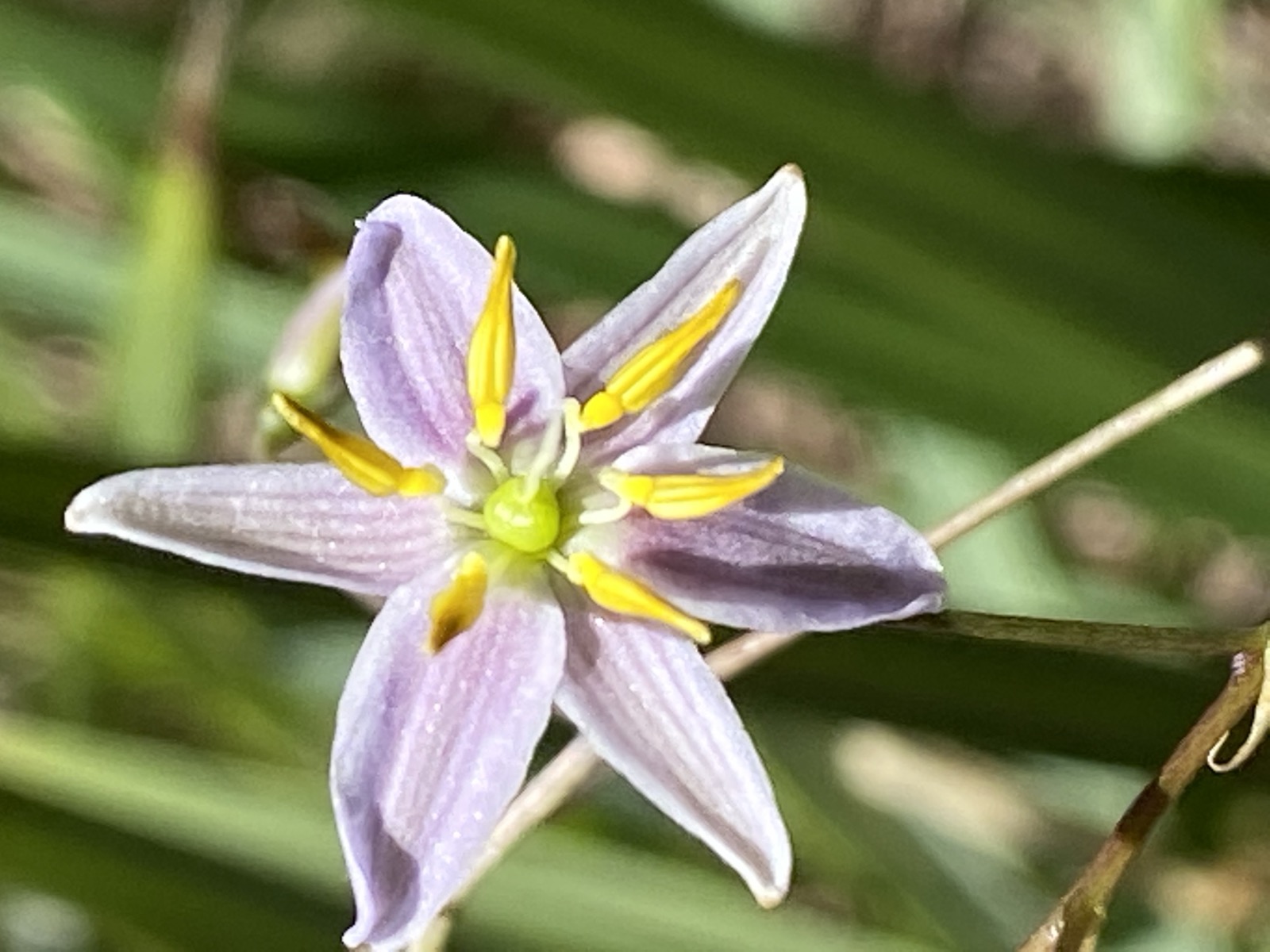
Flax lily (Dianella revoluta). Photo: Allthingsnative, CC BY-SA 3.0.

Why a garden plant becomes a weed here
The Shire's weed guide names the usual routes: berries that birds, gulls and foxes carry into bushland; garden waste dumped near reserves and roadsides; seed and runners that spread from beachside gardens into the dunes; and seed that washes down gutters into wetlands. Only about 30% of the Peninsula's native vegetation remains, and more than half of it is on private land, so what grows in gardens reaches the bush quickly.
"Declared noxious weed" is a legal status under Victoria's Catchment and Land Protection Act 1994, with obligations on landowners. "Environmental weed" is Agriculture Victoria's term for plants that damage bushland but aren't declared. Most plants below are environmental weeds on the Peninsula; a couple are Australian natives from elsewhere behaving badly outside their home range.
Ten swaps
Instead of
Agapanthus
Agapanthus praecox
Spreads from dumped garden waste and seed into roadsides, bushland and waterways.
Try
Flax lily (Dianella) or swamp lily (Crinum pedunculatum)
Clumping strappy border, 0.6 to 1 m
Instead of
Cotoneaster
Cotoneaster species
Berries hang for months and birds carry them into bushland and farmland.
Try
Bottlebrush (Callistemon 'Kings Park Special') or pin-cushion hakea (Hakea laurina)
Screen or hedge to 5 m
Instead of
Myrtle-leaf milkwort
Polygala myrtifolia
Seed moves by water, birds, ants, dumped waste and beach gear along the coast.
Try
Mint bush (Prostanthera species)
Bushy border or screen to 2 m
Instead of
Spanish heath
Erica lusitanica
Millions of tiny seeds blow and wash into coastal woodland and heath, and stay viable for years.
Try
Common heath (Epacris impressa, Victoria's floral emblem) or correa
Upright border or informal hedge to 1 m
Instead of
Arum lily
Zantedeschia aethiopica
Seed and rhizome fragments wash down gutters and streams into wetlands.
Try
Purple flag iris (Patersonia sericea)
Small clumping border or rockery plant
Instead of
English ivy
Hedera helix
Smothers trees and the ground beneath them; berries spread by birds and clippings take root.
Try
Native sarsaparilla (Hardenbergia violacea 'Happy Wanderer')
Climber or groundcover, about 1 m
Instead of
Bluebell creeper
Billardiera heterophylla
A Western Australian native that smothers groundcovers here; berries spread by birds and foxes.
Try
Native sarsaparilla or native clematis (Clematis microphylla)
Twining climber for a fence or trellis
Instead of
Sweet pittosporum
Pittosporum undulatum
Native to eastern Victoria but a weed outside its range; bird-spread berries colonise gullies.
Try
Lilly pilly (Acmena smithii 'minor') or white cloud tree (Melaleuca bracteata)
Hedge or screen tree, 8 to 10 m
Instead of
Gazania
Gazania linearis, G. rigens
Seed and runners spread from beachside gardens into dunes, stopping native ground plants.
Try
Cut-leaf daisy (Brachyscome multifida) or native pigface (Carpobrotus rossii)
Groundcover or rockery; pigface is salt-tolerant
Instead of
Mirror bush
Coprosma repens
Canopy smothers everything beneath it and threatens Coastal Moonah Woodland; gulls and foxes eat the berries.
Try
Boobialla (Myoporum insulare) or rough coprosma (Coprosma hirtella)
Salt-tolerant coastal hedge, 1 to 6 m
Boneseed and freesia are also weeds on the Peninsula. They're left off this list until an institutional source pairs them with a native alternative.
See local stock
When the search opens, each swap links to nearby nurseries that have the native in stock. Get early access
Sources
- Mornington Peninsula Shire, Noxious and environmental weeds guide (2012)
- Grow Me Instead (Nursery & Garden Industry), Victoria brochure
- Grow Me Instead (Nursery & Garden Industry), Gippsland guide
- Agriculture Victoria, Invasive plant classifications
- Victorian Resources Online, Impact assessment: mirror bush in Victoria